October 2026 brings with it Pope Leo XIII's prayer intention: "Let us pray that the mental health ministry be established throughout the Church, helping to overcome the stigma and discrimination of persons with mental illnesses."
This is a call to action for the Church. Not a suggestion.
And it deserves our attention because the reality facing our people is undeniable. Mental health challenges touch nearly every family in our parishes. Anxiety, depression, grief, burnout, trauma; these are not exceptions or signs of weakness. They are part of the human experience, increasingly so in times like ours. Yet too often, our communities have responded with silence, shame, and isolation rather than accompaniment and care.
The Pope's intention names something crucial: the problem is not mental illness itself. The problem is the stigma and discrimination that surrounds it. When people suffer in silence rather than seek help. When they hide their struggles from their faith community. When they internalize the false message that their worth is diminished by their mental health challenges. This is where the Church must step in.
Mental health ministry is not a luxury or an afterthought. It is a core expression of Gospel charity. It flows from Christ's mandate to care for the whole person—body, mind, and spirit. When we create space for people to name their struggles without shame, to find accompaniment in community, and to understand their mental health journey through the lens of their faith, we are doing the work of the Kingdom.
I have always been drawn to the mental health field and to mental health ministry. This calling did not come from a textbook or a program manual. It came from my own lived experience.
I know firsthand what it means to navigate personal mental illness. I have walked alongside loved ones struggling with addiction. I have grieved suicide loss. I have carried my own and my family's deep sorrows. Through these experiences, I learned something essential: shame thrives in silence. But truth, compassion, and accompaniment thrive in honest conversation.
Over the last decade, my work with teenagers has only deepened this conviction. Young people are hungry for honesty. They are exhausted by pretense and performance. When we create space for real conversation, without judgment, without discrimination, without the false piety that demands we hide our struggles; something miraculous happens. People stop isolating. They recognize they're not alone. They find the courage to seek help. They begin to heal.
This is why mental health ministry cannot wait. Our young people need it. Our adults need it. All of us, in our different seasons and struggles, need a community that sees us fully and loves us completely.
Our Vision at Our Lady of Sorrows
My hope is that we continue to build a community here at Our Lady of Sorrows that genuinely desires the good for us all. Not a community of perfect people, but a community where imperfection is met with mercy. Where struggles are named and carried together. Where we love each other well through the good times and the hard times.
More than that, I hope for a community where we understand that accompanying each other through mental health challenges is not separate from our faith—it is central to it. That when we walk beside someone in their grief, their anxiety, their despair, we are participating in Christ's redemptive work. That we strive, always, to bring one another to heaven together.
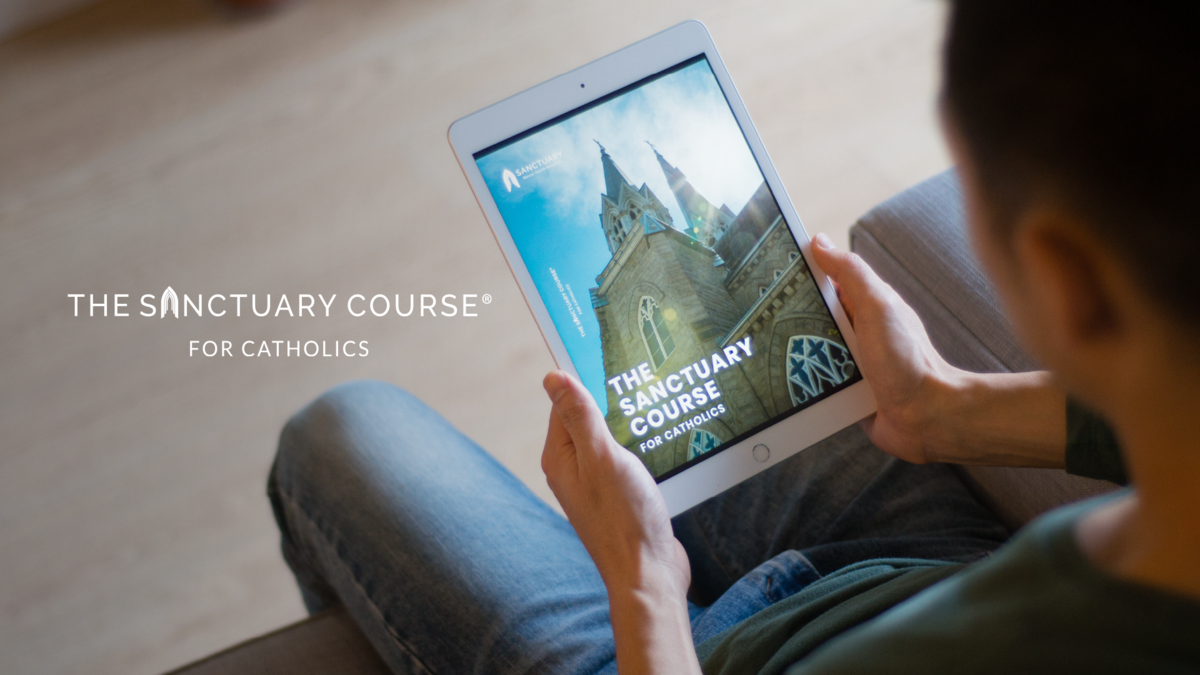
The Sanctuary Course is our first step. But this is about much more than an eight-week program. It's about building a culture in our parish where mental health is talked about openly, where struggling people know they belong, and where the Church's ancient wisdom meets the real needs of today's hearts.
If you or someone you love has been touched by mental illness, addiction, grief, or any mental health challenge, this ministry is for you. You are not alone. And you belong here.
Join us as we answer Pope Leo's prayer intention together.